


Scar therapy
Hands-on care to help a healed scar feel more comfortable and move more freely
Medically reviewed by James Walker, Service Development Director & Senior Physiotherapist, on 26/10/26.
A scar from surgery or an injury can feel tight, tender or restrictive long after the wound has closed. Scar therapy is a hands-on massage treatment that aims to help a healed scar feel softer, more comfortable and more flexible. We offer scar therapy at all 14 White House Clinic locations across South Yorkshire, Derbyshire and Nottinghamshire, and you can book without a referral.
What is scar therapy?
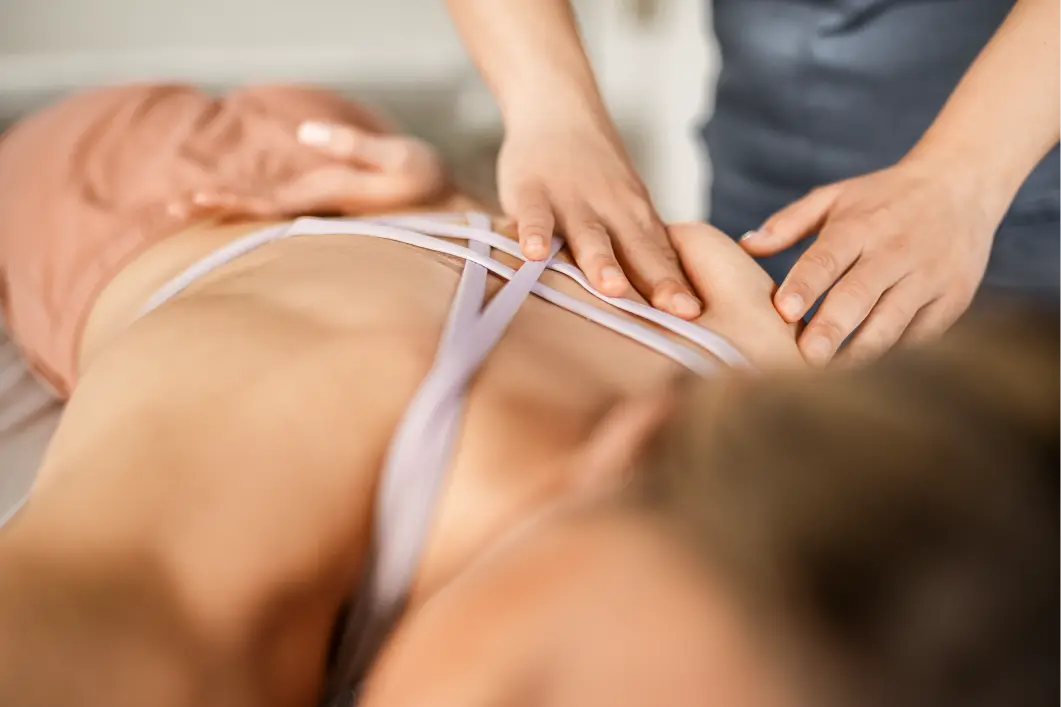
Scar therapy is a treatment in which a therapist uses specialised massage techniques on a healed scar from surgery or injury. By applying gentle pressure and moving the scar and the skin around it, the aim is to improve how the scar feels and moves - easing tightness and discomfort and helping the skin become more supple. It cannot remove a scar.
Who delivers scar therapy?
Both our physiotherapists and our massage therapists deliver scar therapy, in different situations. Our physiotherapists look after your scar after an operation or injury as part of your rehabilitation, once the wound has healed, for example during post-operative physiotherapy. Our massage therapists offer longer-term scar management with scar massage.
Who is scar therapy for?
Scar therapy may suit you if you have a fully healed scar that feels tight, uncomfortable or less flexible than the skin around it. It is commonly used for:
- Scars after surgery, such as joint surgery or a caesarean section (C-section)
- Scars from an injury, such as a deep cut
- Scars that feel tight or seem to pull when you move
- Scars that feel sensitive or uncomfortable to touch, or under clothing
Whether scar therapy is right for your scar is something your therapist will talk through with you. It is not suitable for a wound that is still healing.
When can scar therapy start?
Scar therapy can only start once the wound has fully healed [1]. At the White House Clinic, scar therapy usually begins around 8 weeks after surgery or injury, as long as the scar is healing well and your GP or consultant is happy for you to start. If any part of the wound is still open or weeping, it is not ready yet.
What does a scar therapy session involve?
A scar therapy session combines a short conversation about your scar with gentle hands-on treatment:
- Your therapist asks about your scar: how and when it happened, how it has healed, and how it feels day to day.
- They look at the scar and the skin around it to check it is ready for treatment.
- They apply gentle pressure and move the scar and surrounding skin, adjusting the pressure to what feels comfortable for you.
Scar therapy is usually carried out regularly over a period of time rather than as a single session. It can sit alongside other scar treatments, such as silicone gels or dressings, which the NHS lists among the options for scars [1].
What does the evidence say about scar therapy?
Once a scar has fully healed, massage can help it feel softer, less tight and more comfortable, and can help the skin and tissue around it move more freely [2][3]. Studies also report less pain and itching [2][4]. The research is still limited, but the clearest benefits have been seen in scars after surgery [5]. Most scars also fade naturally over time, which can take up to 2 years or more [1].
When should I see a GP about a scar?
See a GP if your scar is painful or bothering you. Ask for an urgent GP appointment, or contact NHS 111, if a scar or wound becomes swollen, painful or warm, or has pus coming out of it [1]. These need medical advice before any scar therapy, and if you are unsure whether your scar has healed enough, check with your GP or consultant first.
Why have scar therapy at the White House Clinic?
The value of scar therapy is in timing it right and pitching it at the right pressure. Our therapists check your scar is fully healed and ready before treatment begins, then work at a level that suits how your scar feels. Scar therapy is part of our massage services, and a scar is often one part of a wider recovery: if you are getting back to normal after an operation, it can sit alongside post-operative physiotherapy to rebuild strength and movement. To learn more about how scars form and heal, read what a scar is and how scar therapy can help you heal, or explore our massage services.
How much does scar therapy cost?
For current prices, see our prices page, or ask our reception team to confirm the cost when you book.
Book an appointment
Book online or call 0114 230 2030; no referral needed. Our team can help you find the most convenient clinic.
This page is general information and not a substitute for individual assessment.
References
- NHS - Scars: https://www.nhs.uk/conditions/scars/
- Scott HC, Stockdale C, Robinson A, Robinson LS, Brown T - Is massage an effective intervention in the management of post-operative scarring? A scoping review, Journal of Hand Therapy 2022;35(2):186-199 (25 studies, 1,515 participants with post-surgical scars; benefits reported for pain, movement and scar characteristics, with varied methods and outcome measures): https://pubmed.ncbi.nlm.nih.gov/35227556/
- Ault P, Plaza A, Paratz J - Scar massage for hypertrophic burns scarring: a systematic review, Burns 2018;44(1):24-38 (8 publications, 258 people; significant improvement in pliability, pain, scar height and vascularity; evidence of poor quality): https://pubmed.ncbi.nlm.nih.gov/28669442/
- Santuzzi CH, et al. - Massage, laser and shockwave therapy improve pain and scar pruritus after burns: a systematic review, Journal of Physiotherapy 2024;70(1):8-15 (15 randomised trials, 780 people; massage reduced pain and itch): https://pubmed.ncbi.nlm.nih.gov/38072714/
- Shin TM, Bordeaux JS - The role of massage in scar management: a literature review, Dermatologic Surgery 2012;38(3):414-23 (10 publications, 144 patients; evidence described as weak, efficacy appearing greater in postsurgical than traumatic or postburn scars): https://pubmed.ncbi.nlm.nih.gov/22093081/


FAQs
Will scar therapy get rid of my scar?

Does scar therapy hurt?
Scar therapy uses gentle pressure, and your therapist adjusts it to what feels comfortable for you. A scar can feel sensitive, especially in the months after surgery, so tell your therapist if anything feels too uncomfortable and they will adapt the treatment.
Can I massage my scar at home?
Yes, once the wound has fully healed. The NHS suggests massaging a healed scar with a water-based cream [1]. Do not massage a wound that is still healing, and if you are unsure whether your scar is ready, ask your GP, consultant or therapist.
Do I need a referral for scar therapy?
No. You can book scar therapy at the White House Clinic without a referral, online or by calling 0114 230 2030. Because treatment only starts once your wound has fully healed, it is worth checking with your GP or consultant first if you have recently had surgery.
Our Locations

Stay up to date with our regular advice articles and latest news


Our team are ready and waiting to assist with your recovery.


No. You cannot get rid of a scar completely, and most scars fade naturally over time, which can take up to 2 years or more [1]. Scar therapy aims to help a healed scar feel softer, more comfortable and more flexible, and for some people it may become less noticeable.