Bowel problems: symptoms, causes and how physiotherapy can help
Written by Hannah Gray, Women's and Men's Health Specialist Physiotherapist.
Medically reviewed by James Walker, Service Development Director & Senior Physiotherapist, on 14/09/26.
Bowel problems can affect your everyday life, and though they might feel difficult to talk about, they are more common than most people realise. Around 1 in 10 people are affected by faecal incontinence to some degree, and an estimated 0.5% to 1% of adults experience regular faecal incontinence that affects their quality of life. [1] In a UK community study of adults aged 40 and over, 1.4% reported major faecal incontinence. [2]
The symptoms take different forms. Some people find it difficult to empty their bowel fully, which leaves them uncomfortable, going back and forth to the toilet, or straining. Sometimes it includes having difficulty wiping their bottom clean. Others have symptoms of bowel urgency, going more frequently, incontinence and problems controlling wind.
These symptoms can affect your confidence as much as your comfort. At the White House Clinic, we know that fast access to answers and treatment can make a meaningful difference in your life. Our specialist women's health physiotherapists see patients with bowel symptoms at Sheffield West and Chesterfield, and our men's health service runs at Chesterfield. They assess the cause of your symptoms and create a personalised treatment plan to help improve your comfort, confidence and day-to-day life.
What causes bowel problems?
Bowel problems can happen to anyone. Some of the common causes are:
- Constipation, made worse by ill health, a poor diet and dehydration from a lack of fluids.
- Some medications, such as anti-depressants, pain relief and iron tablets.
- Bowel disease, such as Crohn's disease, IBS or diverticulitis.
- Neurological disease, such as multiple sclerosis, stroke or Parkinson's disease.
- Diarrhoea.
- Damage or weakness of the muscles around the anus, which means the muscles are unable to hold back the stools until you reach the toilet.
When to visit your GP with bowel symptoms
If you notice changes in your digestive system or problems with your poo, it is important to see a GP. This comes before physiotherapy, not instead of it, because a GP can look into what is behind a change in your bowel habit.
Visit your doctor if you have diarrhoea or constipation, are going more than usual, have blood in your poo, are losing weight, are very tired, or have abdominal pain or a lump.
Treatment for bowel problems
At the White House Clinic, specialist physiotherapists provide personalised care to help you manage bowel symptoms while improving your quality of life. Physiotherapy for bowel incontinence, constipation and difficulty emptying starts with understanding what is driving the symptoms rather than treating them in isolation.
Your physiotherapist will begin with a detailed evaluation to understand your symptoms, general health, lifestyle and any factors that may be causing the problem.
As part of your assessment, your clinician may ask you to complete a bowel diary to track diet, fluid intake and symptoms. In some cases, they may recommend a physical examination to better understand how the muscles and structures are working. If that is necessary, it will be discussed with you first.
Treatment concentrates on practical, evidence-based strategies to help improve bowel function, reduce symptoms and aid long-term management.
The assessment behind this care is our women's health physiotherapy service, which runs at Sheffield West and Chesterfield for women, and at Chesterfield for men. If you are unsure which service you need, our team can talk it through with you before you book.
Simple lifestyle changes to try for healthier bowels
Lifestyle changes can support better management of bowel symptoms. These are the measures a physiotherapist most often discusses, and which of them suits you is part of what an assessment works out.
- Regular bowel routine: establishing a regular bowel routine can help. After meals is a common suggestion, because the bowel is naturally more active then.
- Exercise: increasing your physical activity helps stimulate bowel movement.
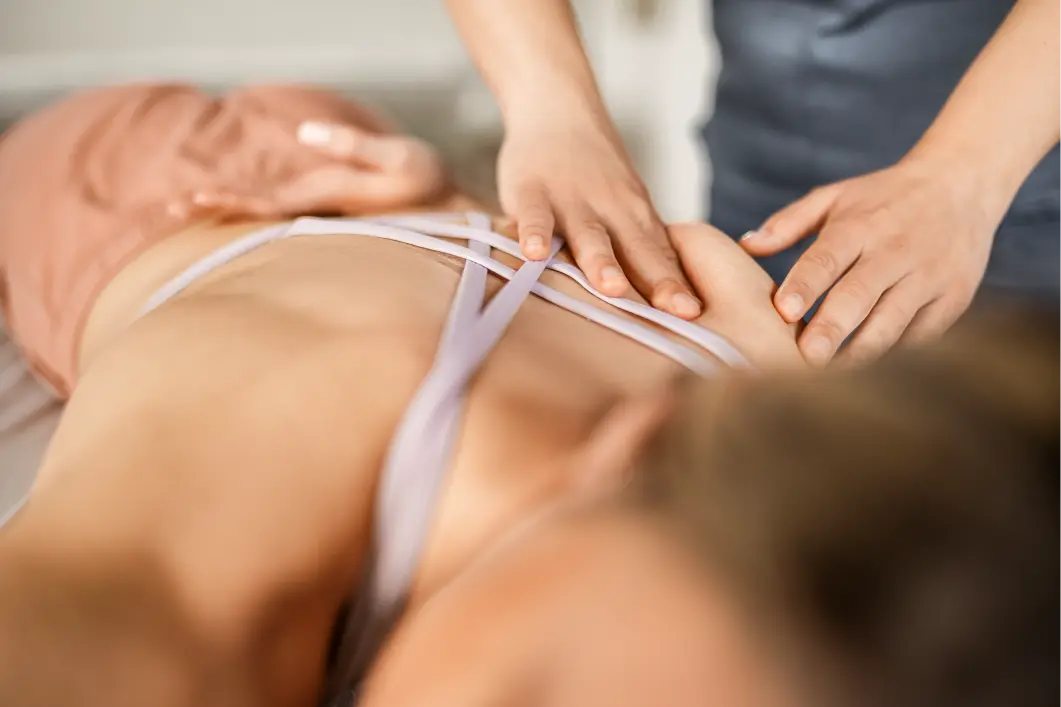
- Self-abdominal massage: in a randomised trial, abdominal massage alongside usual laxative treatment reduced the severity of gastrointestinal symptoms and increased the number of bowel movements, though it did not replace laxatives. [3]
- Using the correct position: some people find a footstool, which raises the knees above the hips, makes opening the bowels feel easier. Your physiotherapist can advise on what suits you.
- Anal sphincter exercises: pelvic floor and anal sphincter exercises can help improve bowel control if urgency is a problem, and a specialist physiotherapist can teach the technique and check you are doing it correctly.
- Dietary changes: adjusting your diet can support bowel health and reduce symptoms.
- Dietary fibre advice: government guidelines recommend 30g of fibre a day for adults, and most adults currently eat around 20g. [4]
If you also have bladder symptoms, we have written separately about what bladder symptoms can mean and what can help.
Discuss your symptoms with the White House Clinic
Physiotherapy can help improve bowel problems. At the White House Clinic, our specialist women's and men's health physiotherapists provide tailored support to help you better understand and manage your symptoms successfully.
If you are unsure which service you require, we would recommend that you are triaged by our team before arranging an appointment. Call 0114 230 2030 or email info@whitehouse-clinic.co.uk and one of the team will briefly go over your concerns and identify the best person for you to see. For women's health at Sheffield West, ask to book in with Jackie Gibbon, Specialist Women's Health Physiotherapist; at Chesterfield, ask for Hannah Gray. You can also book online.
This article is general information and not a substitute for individual assessment. Book an appointment or call 0114 230 2030 to speak to our team.
References
- NHS England - Excellence in Continence Care: practical guidance for commissioners, and leaders in health and social care, June 2018, p.6. "1 in 10 of the population are affected by faecal incontinence"; "it is likely that 0.5-1% of adults experience regular faecal incontinence that affects their quality of life"
- Perry S, Shaw C, McGrother C, Matthews RJ, Assassa RP, Dallosso H, et al. - Prevalence of faecal incontinence in adults aged 40 years or more living in the community. Gut, 2002;50(4):480-4. 1.4% reported major faecal incontinence:
- Lämås K, Lindholm L, Stenlund H, Engström B, Jacobsson C - Effects of abdominal massage in management of constipation: a randomised controlled trial. International Journal of Nursing Studies, 2009;46(6):759-67. 60 participants; massage plus laxatives significantly decreased the severity of gastrointestinal symptoms and increased bowel movements compared with laxatives alone, with no significant change in laxative intake
- NHS - How to get more fibre into your diet. "Government guidelines say our dietary fibre intake should increase to 30g a day"; most adults eat an average of about 20g a day


Stay up to date with our regular advice articles and latest news
Our Locations

Share this Post


Our team are ready and waiting to assist with your recovery.